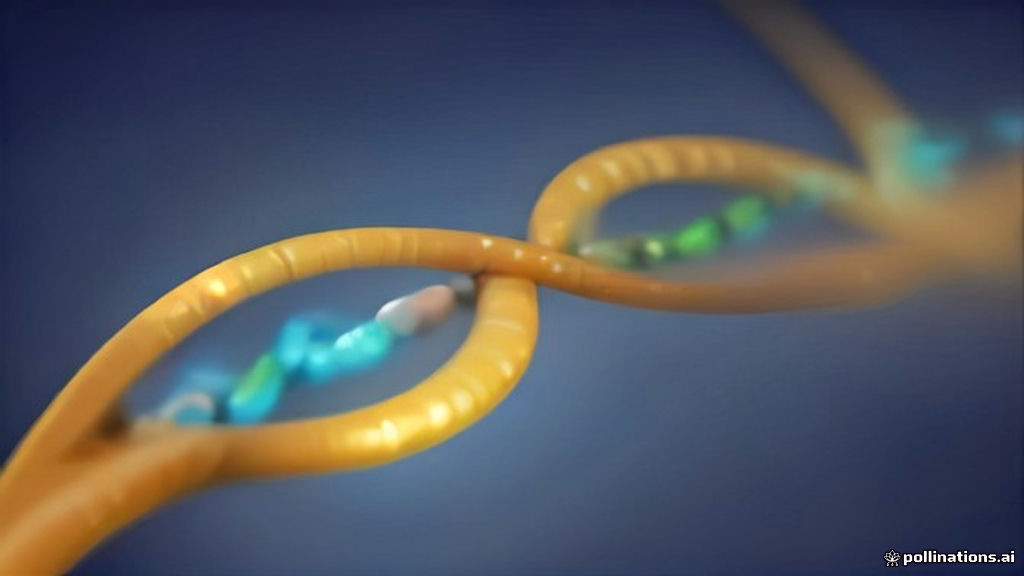
What is the molecular basis of inheritance?
Ever wondered why you share your mother’s eye colour but your dad’s dimples? The answer lives in tiny molecules that act like a secret code.
💡 In Simple Words: Inheritance is the passing of traits from parents to kids. The molecular basis means those traits are stored in DNA, copied, and turned into proteins that shape who we are.
Why DNA is called the genetic blueprint
DNA (deoxyribonucleic acid) is a long, twisted ladder made of four building blocks called nucleotides – A, T, C and G. Think of it like a long strip of LEGO bricks, each colour representing a letter. The order of these letters spells out instructions for every protein in your body.
Key terms you’ll see in class notes
- Gene: a specific segment of DNA that codes for one protein.
- Allele: different versions of the same gene, like different flavours of ice‑cream.
- Chromosome: a tightly packed bundle of DNA, similar to a rolled‑up carpet.
From DNA to trait: the central dogma
The central dogma is the one‑line story that most textbooks repeat: DNA → RNA → Protein. First, DNA is copied into RNA (a process called transcription). Then RNA is read to build a protein (translation). The protein finally does the work that gives you a visible trait.
Step‑by‑step short notes
| Step | What happens |
|---|---|
| 1. Replication | DNA makes an identical copy before cell division, like photocopying a recipe. |
| 2. Transcription | RNA polymerase reads a gene and builds messenger RNA (mRNA), the messenger that carries the recipe. |
| 3. RNA processing | In eukaryotes, the raw mRNA is trimmed and a protective cap is added, similar to editing a draft. |
| 4. Translation | Ribosome reads the mRNA three letters at a time (codons) and adds the matching amino acid, building a protein chain. |
| 5. Post‑translational modification | Proteins may be folded or tagged, like folding a paper crane before it flies. |
How mutations change the story
A mutation is a tiny change in the DNA letters – a typo in the recipe. Some typos are harmless, some make the protein useless, and a few even give a new flavour that can be useful.
Common mutation types (quick glance)
- Point mutation: a single nucleotide is swapped, inserted or deleted.
- Frameshift: insertion or deletion shifts the reading frame, scrambling the whole protein.
- Silent mutation: changes a letter but still makes the same protein, like using “colour” instead of “color”.
Linking the theory to NCERT solutions
If you search for "biology molecular basis of inheritance ncert solutions", you’ll find step‑by‑step answers that follow the exact flow we just described. Use our table and flowchart to match each NCERT question with the right stage of the central dogma.
Quick revision – molecular basis of inheritance topics
- DNA structure and replication
- Transcription and RNA processing
- Translation and protein synthesis
- Gene regulation basics
- Types of mutations and their effects
📝 Likely Exam Questions
- Explain the central dogma of molecular biology in simple words. Answer: DNA is copied into mRNA (transcription) and mRNA is read by ribosomes to make a protein (translation). The protein then determines the trait.
- What is the role of RNA polymerase during transcription? Answer: It binds to the promoter region of a gene and unwinds DNA to synthesize a complementary mRNA strand.
- Give one example of a point mutation and its possible effect. Answer: Sickle‑cell disease is caused by a single base change (A→T) in the β‑globin gene, resulting in an abnormal hemoglobin protein.
- Why are silent mutations usually harmless? Answer: They change a DNA base but still code for the same amino acid, so the protein’s structure stays unchanged.
- List two ways a cell can regulate gene expression. Answer: (i) By controlling transcription factors that turn genes on/off; (ii) By modifying mRNA stability, affecting how long it lasts for translation.