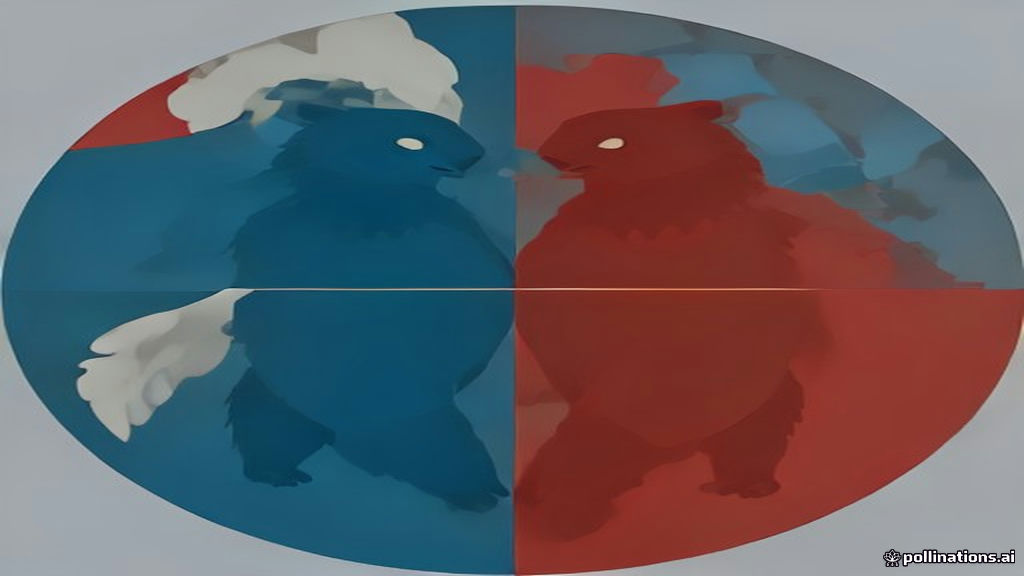
Why does the Cold War still matter to you?
Imagine two kids on a playground who never fight with fists but keep staring, whispering, and trying to out‑smart each other. That tension shaped the world we live in today, from the internet to the movies you watch.
💡 In Simple Words: The Cold War was a long, uneasy rivalry between the United States (the "big brother" of capitalism) and the Soviet Union (the "big brother" of communism). They never fought directly, but they competed in weapons, space, and ideas, making the whole planet feel the pressure.
What sparked the Cold War?
After World War II, the Allies—mainly the US and the USSR—had different ideas about how to rebuild Europe. The US wanted free markets and democracy, while the USSR wanted a world where the government owned everything. This clash of ideologies (a set of ideas that guide politics) set the stage for the Cold War.
- Power vacuum: Europe was devastated, leaving a gap that both superpowers rushed to fill.
- Mutual suspicion: Each side feared the other wanted to spread its system everywhere.
Key phases of the Cold War
Think of the Cold War as a story with four chapters:
1. Post‑War Division (1945‑1949)
The US and USSR split Europe into two zones. The US created the Marshall Plan (a massive aid package) to rebuild Western Europe, while the USSR set up the COMECON (an economic alliance) for its satellite states.
2. Arms Race & Proxy Wars (1950‑1962)
Both sides built huge stockpiles of nuclear weapons—think of it as a dangerous game of “who can collect the most toys”. They also supported opposite sides in wars in Korea, Vietnam, and Cuba, letting each other fight through third parties.
3. Détente – easing tensions (1963‑1979)
Leaders realized the world could go boom at any moment, so they signed treaties like the Nuclear Non‑Proliferation Treaty (NPT) to limit weapons. Cultural exchanges and trade grew a bit, like two neighbors finally saying “good morning”.
4. End of the Cold War (1980‑1991)
Economic problems in the USSR and reformist leader Mikhail Gorbachev (who introduced “glasnost” – openness, and “perestroika” – restructuring) loosened the Soviet grip. The Berlin Wall fell in 1989, and by 1991 the USSR dissolved.
Comparing the two superpowers
| Aspect | United States (Capitalist) | Soviet Union (Communist) |
|---|---|---|
| Economic system | Private ownership, market‑driven | State ownership, planned economy |
| Political system | Multi‑party democracy | One‑party rule (Communist Party) |
| Key goal | Contain communism, spread democracy | Spread socialism, counter Western influence |
| Military strategy | Containment (stop spread), build alliances like NATO | Support socialist allies, maintain Warsaw Pact |
Why does the Cold War still matter?
Even though the USSR is gone, many of today’s international tensions trace back to that rivalry. NATO’s expansion, nuclear treaties, and the very idea of “soft power” (influence without force) all grew from the Cold War playground.
📝 Likely Exam Questions
- Explain the main causes of the Cold War. Answer: The Cold War began because the US and USSR had opposing ideologies, competed for global influence after WWII, and mistrusted each other’s intentions, leading to a power vacuum in Europe.
- Describe two ways the Cold War affected India’s foreign policy. Answer: India adopted a non‑aligned stance, refusing to join either bloc, and it hosted the 1971 summit that highlighted the desire for an independent path.
- What was Détente and why did it emerge? Answer: Détente was a period of reduced tension in the 1970s, emerging because both superpowers recognized the catastrophic risk of nuclear war and sought arms‑control agreements.
- How did Gorbachev’s policies contribute to the end of the Cold War? Answer: Gorbachev introduced glasnost (openness) and perestroika (restructuring), which loosened political control, encouraged public debate, and weakened the Soviet economy, leading to the collapse of the USSR.
- Compare the Marshall Plan and COMECON. Answer: The Marshall Plan was US aid to rebuild Western Europe and promote capitalism, while COMECON was a Soviet economic bloc to integrate socialist economies and counter Western influence.