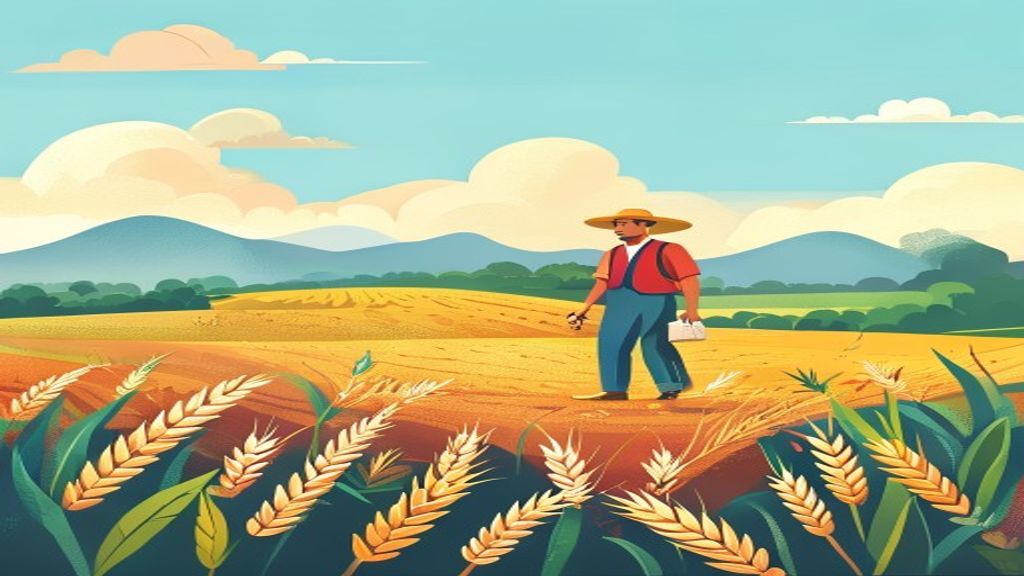
Why India's farms matter
Imagine a country where the food on your plate, the cotton in your shirt, and the oil in your kitchen all come from the same patchwork of fields. That is India – a land where farming touches every corner of daily life.
💡 In Simple Words: India grows many different crops because its climate changes from north to south and from hills to plains. Farmers pick the right seed for each season, so the country can feed billions of people.
How climate decides what grows where
Think of India as a giant kitchen with several ovens. Each oven (climate zone) has its own temperature and timing, so you need a different recipe (crop) for each.
| Climate Zone | Typical Rainfall | Key Crops |
|---|---|---|
| Humid tropical (e.g., Kerala, West Bengal) | 2000‑3000 mm | Rice, coconut, rubber |
| Sub‑tropical (e.g., Punjab, Haryana) | 600‑1000 mm | Wheat, mustard, cotton |
| Arid & semi‑arid (e.g., Rajasthan, Gujarat) | 200‑500 mm | Millet, sorghum, pulses |
1. Kharif crops – the monsoon harvest
Kharif (pronounced "kha‑rif") means “summer” in Hindi. These crops are sown when the monsoon rains start in June and are harvested around September‑October. The rain is like a natural sprinkler that fills the soil.
- Rice – the staple for more than half of Indians.
- Maize (corn) – used for food, animal feed, and industrial starch.
- Jowar (sorghum) and bajra (pearl millet) – thrive in drier parts.
- Pulses such as moong and urad – add protein to meals.
2. Rabi crops – the winter sowing
Rabi (pronounced "ra‑bee") means “spring”. After the monsoon retreats, farmers rely on irrigation (artificial water supply) to grow these crops from October to March.
- Wheat – the most important grain in north‑India.
- Barley – used for malt and animal feed.
- Mustard – provides edible oil and a pungent spice.
- Gram (chickpea) and lentil – key protein sources.
3. Zaid crops – the short summer gap
Zaid (pronounced "zayd") covers the brief warm period between Rabi and Kharif, roughly March to June. These crops need less water and grow quickly.
- Watermelon and muskmelon – sweet summer treats.
- Urad (black gram) – often used for making snacks.
- Groundnut – gives oil and protein.
Summarising the major crops
- Rice – Kharif, humid tropical zones, needs standing water.
- Wheat – Rabi, sub‑tropical plains, thrives with irrigation.
- Cotton – Mostly Kharif in rain‑fed areas, also grown as a Rabi in irrigated fields.
- Sugarcane – Grown year‑round in well‑irrigated zones, especially Maharashtra and Uttar Pradesh.
- Millets – Important in arid zones, both Kharif and Rabi.
How farmers decide what to plant
First, they check the local climate zone. Then they look at water availability – is there reliable irrigation or just rain? Next, they consider market demand – is there a good price for wheat or for cotton this year? Finally, they choose seeds that match the soil type, whether it’s sandy, loamy, or clayey.
📝 Likely Exam Questions
- Explain the difference between Kharif and Rabi crops with two examples for each.
Answer: Kharif crops are sown with the monsoon (June‑Sept) and harvested in autumn; examples are rice and maize. Rabi crops are sown after the monsoon (Oct‑Mar) using irrigation and harvested in spring; examples are wheat and mustard. - Why does cotton grow mainly in Kharif season in rain‑fed areas?
Answer: Cotton needs a long, warm period and moderate rainfall, which the monsoon provides. The moisture helps the plant develop bolls before the dry season. - Match the following crops with their predominant climate zones: (a) Rice, (b) Wheat, (c) Millets.
Answer: (a) Humid tropical, (b) Sub‑tropical, (c) Arid & semi‑arid. - What role does irrigation play in Rabi agriculture?
Answer: Irrigation supplies water when rains are scarce, allowing crops like wheat and barley to grow during the dry winter months. - List three factors a farmer considers before choosing a crop.
Answer: Climate zone, water availability, market price/demand.