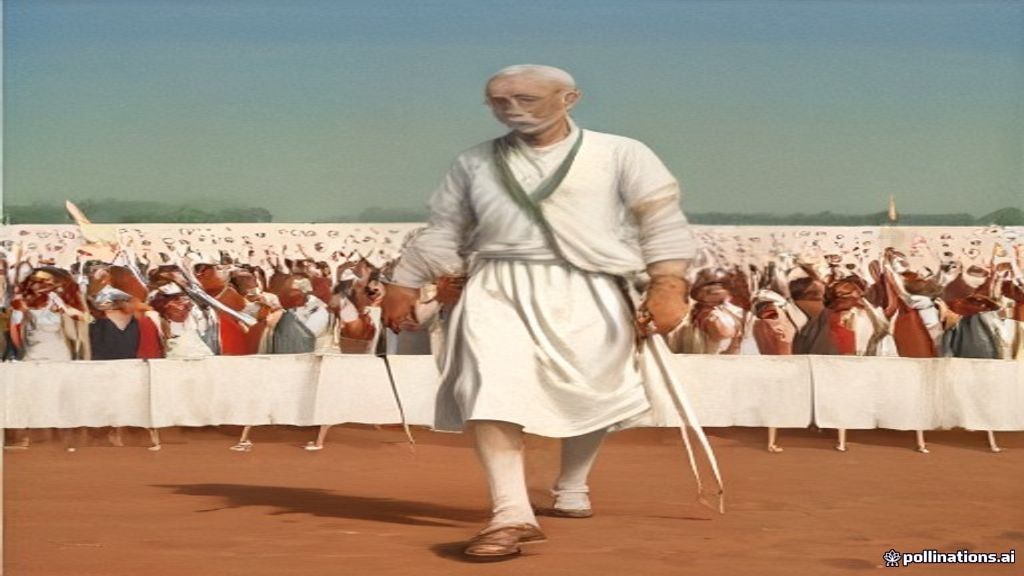
Why Gandhi’s Strategies Still Matter
Imagine an entire nation refusing to buy British cloth, go to courts, or even pick up a piece of salt – that’s exactly what Mahatma Gandhi asked Indians to do. The ripple effect shaped the fight for Indian independence and still shows up in protests today.
💡 In Simple Words: Gandhi led two big campaigns – the Non‑Cooperation Movement and the Civil Disobedience Movement. Both asked Indians to peacefully break British rules, like not paying taxes or buying British goods, to show how unfair the rule was.
What was the Gandhian Era?
The Gandhian era refers to the period when Mahatma Gandhi’s ideas of non‑violent resistance guided the freedom struggle. His approach combined moral force with mass participation, turning ordinary people into political agents.
Non‑Cooperation Movement (1920‑22)
Non‑cooperation means refusing to cooperate with an authority you consider illegitimate. In plain terms, it’s like a schoolboy refusing to do homework because the teacher is unfair. Gandhi launched this movement after the Jallianwala Bagh massacre and the harsh Rowlatt Act (a law that let the British imprison people without trial).
- Key actions: boycotting British schools, courts, and titles; refusing to pay taxes; using khadi (hand‑spun cloth) instead of British textiles.
- Leadership: Gandhi, along with leaders like Motilal Nehru and C. R. Das, organized nationwide protests.
- Outcome: Millions joined, but the movement was called off after the Chauri Chaura incident (a violent clash) because Gandhi insisted on strict non‑violence.
Civil Disobedience Movement (1930‑34)
Civil disobedience is the deliberate, peaceful breaking of a law to highlight its injustice. Think of it as deliberately crossing a street against a red light to prove the light is broken, but doing it calmly and accepting the consequences.
- Salt March (Dandi March): In March 1930, Gandhi walked 240 km to the coastal village of Dandi and made salt from seawater, defying the British monopoly on salt.
- Nationwide boycott: Indians refused to buy British goods, paid taxes, or obey certain laws.
- Mass arrests: Over 60,000 people, including Gandhi, were jailed, yet the movement kept growing.
- Result: The British were forced to negotiate, leading to the Round Table Conferences and eventually the Government of India Act 1935.
Comparing the Two Movements
| Aspect | Non‑Cooperation | Civil Disobedience |
|---|---|---|
| Start year | 1920 | 1930 |
| Trigger | Jallianwala Bagh massacre & Rowlatt Act | Salt tax & British monopoly on salt |
| Core tactic | Boycott of institutions | Open breaking of specific laws |
| Major event | Boycott of schools & courts | Salt March (Dandi) |
| Reason for suspension | Violence at Chauri Chaura | World War II & British repression |
How the Movements Flowed
Why These Strategies Worked
Gandhi’s tactics turned the fight into a moral issue. By willingly accepting punishment, Indians showed the world that the British rule was unjust, not because they were violent, but because they were willing to suffer for freedom.
Another reason was the symbolic power of everyday actions – making salt, spinning cloth, or refusing to attend school. These acts let anyone, from a farmer to a student, join the struggle.
Key Terms to Remember
- Khadi: Hand‑spun cloth promoted by Gandhi to replace British textiles.
- Chauri Chaura: A 1922 incident where a protest turned violent, leading Gandhi to pause the Non‑Cooperation Movement.
- Round Table Conferences: Meetings between Indian leaders and the British to discuss constitutional reforms.
📝 Likely Exam Questions
1. Explain why Gandhi called off the Non‑Cooperation Movement in 1922.
Answer: Gandhi stopped the movement after the Chauri Chaura incident because the protest turned violent, which went against his principle of non‑violence (ahimsa). He believed that any use of force would undermine the moral authority of the freedom struggle.
2. Describe the significance of the Salt March in the Civil Disobedience Movement.
Answer: The Salt March demonstrated the power of peaceful protest by openly breaking the British salt law. It mobilised millions across the country, attracted global attention, and forced the British to confront the scale of Indian opposition, eventually leading to negotiations.
3. Compare the objectives and methods of the Non‑Cooperation and Civil Disobedience movements.
Answer: Both aimed to end British rule, but Non‑Cooperation focused on boycotting British institutions (schools, courts) to withdraw cooperation, while Civil Disobedience involved deliberately breaking specific laws (like the salt tax) to highlight injustice. The latter used more direct law‑breaking actions, whereas the former emphasized withdrawal of participation.
4. How did Gandhi’s use of khadi support the independence struggle?
Answer: Khadi symbolised self‑reliance and economic resistance. By urging Indians to spin and wear khadi, Gandhi reduced dependence on British textiles, boosted local industry, and turned everyday clothing into a political statement.
5. What role did the Round Table Conferences play after the Civil Disobedience Movement?
Answer: The conferences were a series of talks between Indian leaders and the British government to discuss constitutional reforms. They were a direct outcome of the pressure created by the Civil Disobedience Movement and led to the Government of India Act 1935, which gave Indians limited self‑government.