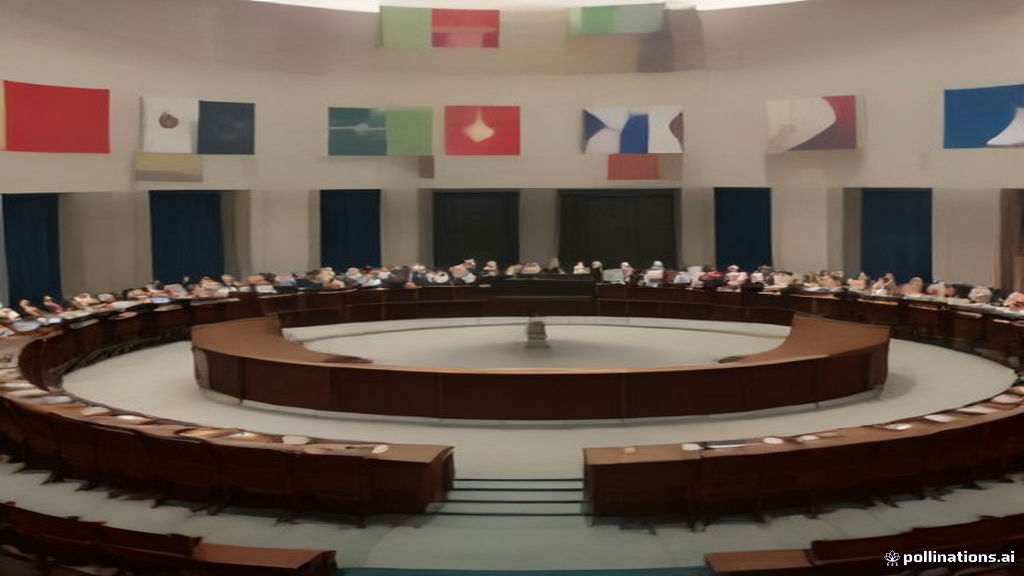
Imagine a group of countries trying to keep the peace like a neighborhood watch after a massive fight – that was the spirit behind the League of Nations.
In simple words, the League of Nations was an early attempt by many nations to work together so that wars wouldn’t happen again. It started after World War I, but it soon ran into problems that made it collapse.
What sparked the idea of a world peace league?
When World War I ended in 1918, the world was exhausted and hungry for a way to stop another huge conflict. The Treaty of Versailles (the peace agreement that officially ended the war) included a clause to create a new international body. American President Woodrow Wilson – think of him as the class president who wanted everyone to play fair – proposed the Fourteen Points, a list of ideas for a safer world. One of those points was a permanent organization where countries could discuss problems instead of picking up swords.
Key members and structure
The League’s first meeting was in Geneva, Switzerland in 1920. About 42 countries signed up, including Britain, France, Italy, Japan and Canada. The United States never joined because the U.S. Senate refused to ratify the treaty – it’s like inviting a strong teammate to a game and then they decide not to play.
- Assembly – every member sent a delegate; this was the big “town hall” where decisions were discussed.
- Council – a smaller group of major powers that handled urgent matters, similar to a school’s student council.
- Secretariat – the administrative office that kept records and organized meetings.
Goals of the League
The League aimed to achieve three big things:
- Collective security – if one country was attacked, all members would come to its aid, like friends stepping in when one gets bullied.
- Disarmament – reducing weapons to lower the chance of war, comparable to agreeing to lower the volume on loud music.
- Resolving disputes peacefully – using talks, investigations, and arbitration instead of fighting.
Why the League stumbled – major reasons for failure
Despite its good intentions, the League faced several roadblocks that made it ineffective.
Lack of big powers
When the United States stayed out, the League lost a powerful “player”. Without the U.S., it was harder to enforce rules, much like a sports league without its star team.
Unanimity rule
Decisions in the Council required every major power to agree – that’s called unanimity. If even one country said “no”, the action stalled. Imagine trying to decide on a class trip where every single student must vote “yes” – it would rarely happen.
No real army
The League could only impose sanctions (economic penalties) but had no troops to back them up. It’s like threatening to take away a friend’s lunch money without actually being able to enforce it.
Economic turmoil and rising nationalism
The Great Depression of the 1930s made countries focus on their own survival, and aggressive leaders like Hitler in Germany, Mussolini in Italy, and militarists in Japan chose to ignore the League.
Key events that exposed its weakness
- Japanese invasion of Manchuria (1931) – Japan marched into Chinese territory, and the League could only issue a weak reprimand.
- Italian invasion of Ethiopia (1935) – Italy attacked a fellow member, and the League’s sanctions were half‑hearted, like a teacher giving a small timeout for a big fight.
- Spanish Civil War (1936‑1939) – The League stayed neutral, letting the conflict rage on.
Quick comparison: League of Nations vs United Nations
| Aspect | League of Nations | United Nations |
|---|---|---|
| Founding year | 1920 | 1945 |
| Key founding document | League Covenant (part of Treaty of Versailles) | UN Charter |
| Major powers participation | US absent, others often left | All five permanent Security Council members (US, UK, France, Russia, China) are members |
| Decision rule in main council | Unanimity required | Veto power for permanent members |
| Enforcement ability | No standing army, limited sanctions | Peacekeeping forces, stronger sanctions |
📝 Likely Exam Questions
- Explain why the League of Nations was created after World War I.
Answer: It was created to prevent another world war by providing a platform for countries to discuss disputes, promote collective security, and reduce armaments, ideas that came from Woodrow Wilson’s Fourteen Points and the Treaty of Versailles. - List two major reasons for the failure of the League of Nations.
Answer: (i) The United States never joined, weakening its authority; (ii) The requirement for unanimous decisions in the Council often blocked decisive action. - What was the impact of the Japanese invasion of Manchuria on the League’s credibility?
Answer: The League could only issue a mild condemnation and could not stop Japan, showing that it lacked enforcement power and hurting its reputation as a peace‑keeping body. - Compare the decision‑making process of the League of Nations with that of the United Nations.
Answer: The League required unanimity among its major powers, which made action difficult, whereas the UN Security Council uses a veto system where any of the five permanent members can block a resolution, allowing more flexible but sometimes controversial decisions. - Why is the League of Nations considered a predecessor of the United Nations?
Answer: Both aim to maintain international peace and security, and the UN adopted many of the League’s structures (like an Assembly and a Secretariat) while fixing its flaws, such as adding a peace‑keeping force and allowing broader membership.